

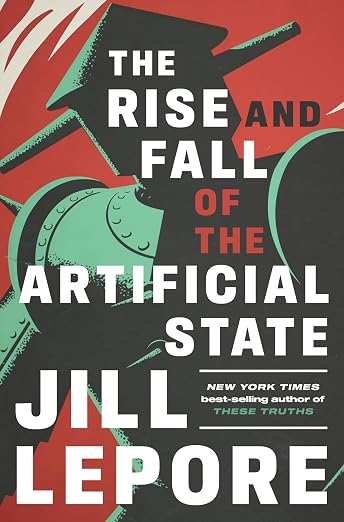
In her much-admired style, Jill Lepore discusses the optimistic and pessimistic aspects of the rise of the artificial state throughout history. She clearly understands history, and everything she asserts is well documented. In this book, she describes how the line between human and machine has been blurred and has always been a concern, but certainly not a new phenomenon.
The author traces humanity’s desire for machines to perform mundane tasks back to early censuses, when tyrannical rulers had to know how many people they controlled. Likewise, in the US, the development of counting systems that eventually led to modern-day computers has its roots in keeping track of people and has given rise to Social Security numbers and other identifiers. As more data was collected, there were more opportunities to use machines to improve human quality of life. This includes the development of trains and other infrastructure that both connect people and enable machines to perform work more efficiently.
Much of this book reads like a textbook. So, it was more informative than enjoyable. Having said that, some parts gave me pause and made me challenge my assumptions about the definitions and uses of technology in society. My favorite part was the chapter on Twitter and how Obama was among the first presidential candidates to rely heavily on it during a campaign. Then, of course, social media became a part of every future election. Although some claim that social media supports democracy because everyone can weigh in, the author provides evidence to the contrary. Social media can undermine democracy and lead to mistrust in government.
Since I mainly read fiction and learn many valuable lessons from literary artists, I particularly like the way Lepore cites both fictional and scholarly works in her narrative to make her points. She provides many examples of science fiction works that have long acted as cautionary tales and fables, essentially predicting the artificial state that has crept upon us. Contemporary novels and movies serve a great purpose in focusing our attention on the moral quandaries we face.
Many years ago, I read a biography of Isaac Asimov, and it always stuck with me. Through science fiction, Asimov created the Three Laws of Robotics and posed many questions about humans and machines. I loved how Lepore explored his influence in forcing academics and the tech world to consider the use of robots. Lepore draws on Asimov and his contemporaries’ work, extrapolating from their questions to show that modern thinkers’ current questions about AI have been posed in a variety of ways for a century.
Another theme I appreciated involves Elon Musk and his grandfather, Joshua Haldeman, an American-born activist in the Technocracy movement and an outspoken supporter of South African apartheid. Musk hardly knew his grandfather, but Lepore adeptly shows how some of his grandfather’s ideas seem to echo in Musk’s worldview. She also spends considerable time discussing Musk and his multifaceted roles in shaping the artificial state. Again, Lepore returns to the book’s central questions: What is growth, and to what extent has AI infiltrated government decision-making? Lepore explores these questions from multiple angles.
Jill Lepore’s The Rise and Fall of the Artificial State provides some thought-provoking questions. How does change happen? How do we define human, animal, machine, and robot? Have these definitions evolved? What will lead to the demise of humans? Why are there so many stories about humanity’s lost sense of purpose and human extinction? Why do societies frequently debate animal personhood? The line between human and machine may be increasingly obscure, but do human beings still have the ability, and the desire to take control?