

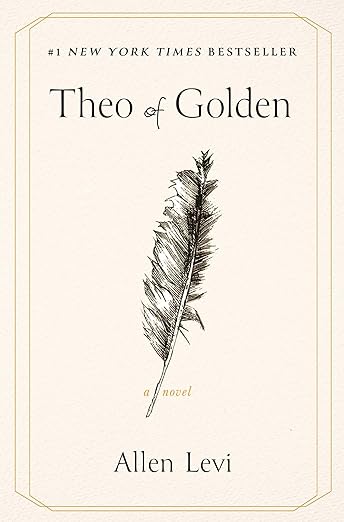
Theo of Golden could restore your faith in humanity, or you might think the kindness and thoughtfulness of the main character are inauthentic and unrealistic. I chose to accept that there are still admirable people in the world, and this author created a character who gives us all something to aspire to in our everyday dealings with our neighbors. The story focuses on an octogenarian, Theo, who seemingly comes to the fictional town of Golden, Georgia, to make others happy. He frequents a coffee shop called The Chalice, whose walls are lined with portraits of local people sketched by a Golden artist named Asher Glissen. Theo begins purchasing them one by one and giving them to the subjects, inhabitants of Golden. Through Theo’s thoughtful letters and meaningful encounters, the reader learns about the town and its citizens, leading to a variety of endearing characters.
Theo models genuine goodness and old-fashioned communication through letters and listening. He writes and speaks poignant messages and becomes involved in the lives of the people to whom he bestows portraits. The author uses the word “bestowal” (of portraits) instead of “gifting”. The choice of vocabulary helps make his gifts appear sacred. Biblical words such as “bestowal” and “sacred” lend the story many religious overtones. When Theo bestows a portrait, he engages with the subject and allows the recipient to converse with him and disclose as much or as little personal information as they wish. Theo presents his portraits on a park bench, which becomes a symbolic bridge for meaningful conversations and an opportunity for divine intervention.
Through his portrait gifts, Theo validates lives and makes generous donations of his own funds to support those who discuss their needs with him. He is discreet and humble and begs for no publicity for his good deeds. One of the more touching recipients is a homeless woman named Ellen. Theo befriends Ellen and not only communicates with her, but also, through his actions, convinces others to see her differently. While the author describes Theo as an old soul, he depicts Ellen as a weary one. Theo discovers her intelligence, education, and worldliness because he takes the time to ask about her and care about her as a person, not just notice her condition and lack of housing.
Another recipient, Kendrick, is a custodian at a university and has a sick daughter. Kendrick becomes an important character in the novel and is clearly appreciative of Theo’s kindness. Other characters, such as an attorney, a bookshop owner, and the artist Asher, have ongoing relationships with Theo to round out the novel’s depth, which is not limited to the recipients of the portraits. Of course, there are negative characters who are not amenable to Theo’s generosity and desire to be kind and see the positive attributes in human beings.
Theo of Golden has a delightful storyline. For the most part, the setting, plot, and characters are believable and relatable. Sometimes the Christian overtones become a bit didactic, but they did not interfere with my enjoyment of the story. Allen Levi shares beautiful thoughts about portraitists and portraits. He allows us to consider who sees more in the portrait, the artist or the viewer. There are many comments about the emotions we convey through our expressions, which an artist often picks up. Much discussion reminded me of the old saying that the eyes are the windows to the soul. Paramount to the book’s messages is that everybody has a story and that human connections are essential for self-development. The author also explores the power of gift-giving and how special gifts can be for both the giver and the receiver. So many poignant human interactions and reactions that will ring true for readers of this book, and it is no wonder it has found its place on so many bestseller lists.